Global Gas Prices Jump After LNG Facility Attack, but U.S. Market Remains Resilient

Aerial view of LNG ship at terminal.

Natural gas prices surged across global markets this week following an attack that forced the shutdown of the world’s largest liquefied natural gas (LNG) export facility. The disruption sparked immediate concern among energy traders and governments alike, pushing international gas benchmarks sharply higher as markets reacted to the sudden loss of supply. Despite the global….

Iran Conflict Sends Shockwaves Through Global LNG Markets

LNG tanker docked at coastal industrial facility.

The ongoing conflict involving Iran and responses by the U.S. and Israel have begun to reshape global energy markets, with liquefied natural gas (LNG) supplies and prices taking center stage. Attacks on energy infrastructure and threats to key shipping routes have disrupted flows of oil and gas through the Persian Gulf, particularly the Strait of….

Natural Gas Prices Climb Amid Cold Weather and Strong Export Demand

Industrial pipeline with valve against sky.

U.S. natural gas prices have shifted notably in recent months as winter weather patterns and global demand dynamics influence the market. According to the U.S. Energy Information Administration’s latest outlooks, benchmark Henry Hub prices are expected to average around $3.90 per million British thermal units (MMBtu) through the winter season and rise further to about….

Japan Restarts Major Nuclear Reactor, Ending Post-Fukushima Halt

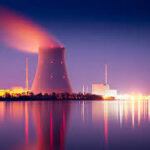
Nuclear power plant with cooling towers.

Japan has taken a major step in reviving its nuclear energy sector with the restart of Reactor No. 6 at the Kashiwazaki-Kariwa Nuclear Power Plant — the first such restart by Tokyo Electric Power Company (TEPCO) since the 2011 Fukushima disaster. The plant, located in Niigata Prefecture and known as the world’s largest nuclear facility….

EPA to Stop Counting Health Benefits in Air Pollution Rules, Raising Concerns About Public Health

Factory smokestacks emitting large clouds of smoke.

The Environmental Protection Agency has announced a major change in how it evaluates air pollution regulations, saying it will no longer assign a monetary value to the health benefits of reducing harmful pollution such as fine particulate matter (PM2.5) and ground-level ozone. Instead, the agency will focus only on the economic costs to industry when….

U.S. and China Locked in High-Stakes Race to Harness Fusion Energy

Earth with solar panels and sunflowers.

The race to develop nuclear fusion — a potentially limitless and clean source of power — is heating up, with China aggressively scaling up investment and research in ways that are forcing the United States to respond. Recent reporting highlights how Chinese government planners and scientists are pouring substantial resources into fusion science, aiming to….

America’s Power Grid Emerges as a Hidden Threat to the AI Boom

US data center demand vs. grid capacity.

As billions continue to pour into artificial intelligence and data center expansion, a quieter but critical challenge is coming into focus: the ability of the U.S. power grid to keep up. New analysis shows that in many regions, projected data center electricity demand is rapidly outpacing available spare grid capacity. Areas including PJM (Mid-Atlantic), Texas….

Natural Gas Prices Surge as Winter, Exports, and Demand Tighten Market

Pipeline with valve at sunrise.

Natural gas prices in the United States have climbed sharply as colder-weather forecasts, rising export demand, and tighter supply dynamics converge ahead of the winter heating season. Futures recently reached levels not seen in several years. According to the U.S. Energy Information Administration (EIA), natural-gas prices paid by electric power plants are projected to rise….

Trump Administration Strengthens Oil-Import Restrictions and Sanctions

Oil pumps operating at sunset, reflected water.

The Trump administration has launched a sharper policy targeting oil imports from certain foreign regimes, introducing fresh sanctions and import bans designed to reduce U.S. dependence on adversarial oil sources and strengthen U.S. energy security. Under the new rules, U.S. companies are barred from importing oil from specified countries tied to sanctions-designated regimes, while U.S…..