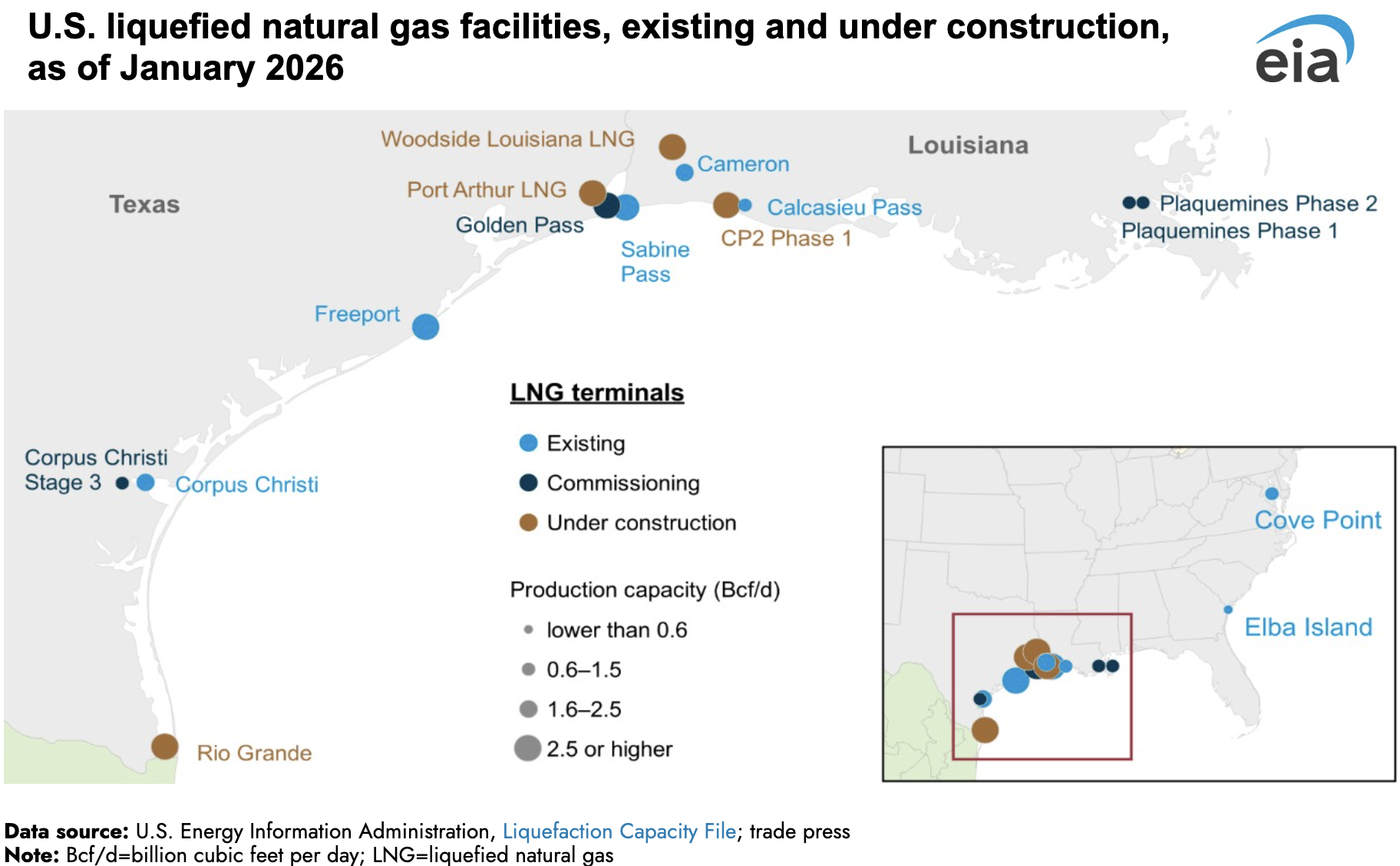
The United States has expanded its role in global energy markets with the launch of a new liquefied natural gas (LNG) export terminal, marking another step in the country’s growing influence as a major energy supplier. The Golden Pass facility, now the tenth LNG export terminal in the U.S., has begun shipping cargoes shortly after reaching initial production, adding new capacity at a time when global gas markets remain under pressure.
This development comes as international demand for LNG continues to rise, particularly amid disruptions to supply routes in key regions. With a significant portion of global gas flows impacted by geopolitical tensions, buyers are increasingly turning to U.S. exports to help fill the gap. The addition of new export capacity strengthens the country’s ability to respond to these shifts, even as existing facilities are already operating at high utilization levels.
The Golden Pass project has faced a long path to completion, including construction delays and contractor changes, but its startup signals renewed momentum for U.S. LNG growth. Backed by major global energy companies, the facility is expected to play a meaningful role in supplying international markets and supporting long-term export expansion.
As global energy markets continue to adjust to supply disruptions and shifting demand patterns, new infrastructure like Golden Pass highlights the evolving role of the United States as a stabilizing force in the LNG market. Increased export capacity not only strengthens global supply options but also reinforces the interconnected nature of energy markets, where developments in one region can have immediate impacts worldwide.